
Building a home from scratch can feel like a leap into the unknown, and for many families, that is exactly why they keep renting or settling for a house that was never quite right. The good news is that the custom home building process is not a leap at all. It is a path, one clear step leading to the next, and once you can see the whole path laid out, the whole thing feels a great deal less intimidating.
This guide walks you through the custom home building process step by step, from the first phone call to the day you turn the key. You will see what happens at each stage, what decisions land on your plate, and what a good builder should handle so you never feel lost along the way.
Why understanding the process matters before you start
Most of the anxiety around building a home comes from not knowing what comes next. When a step arrives that you did not expect, it feels like a problem. When you saw it coming, it feels like progress.
Knowing the process ahead of time does three things for you. It helps you make decisions at the right moments instead of scrambling. It lets you spot a disorganized builder early, because a good one can explain exactly where you are and what happens next. And it turns a huge, abstract project into a series of manageable choices. So let us break it down.
Step 1: It starts with a conversation
Every custom home begins with a simple sit-down, not a contract. In this first consultation, you talk through what you need, how your family actually lives, your rough timeline, and where your land situation stands. Just as importantly, it is where you and the builder figure out whether you are a good fit for each other.
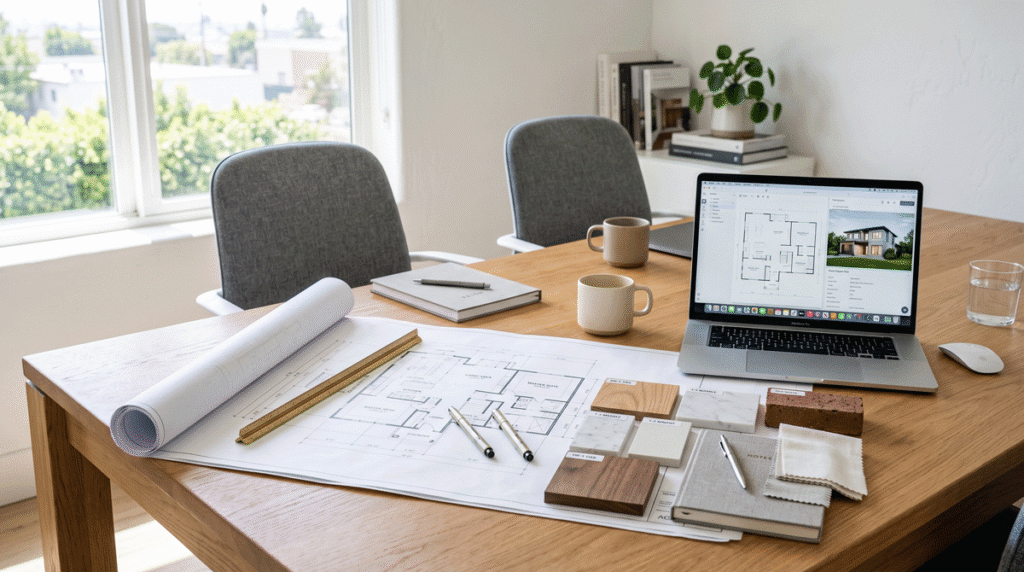
Come with your questions and your wish list. This is the moment to be honest about your priorities and your budget range, because everything that follows is shaped by what the builder learns here. A builder who listens more than they talk in this meeting is a good sign.
Step 2: Your land comes first
Before floor plans or finishes, the conversation turns to your lot, because the land drives so much of what is possible. If you already own property, the builder evaluates the site and flags what it will need, whether that is grading, utility connections, a septic system, or a well. If you are still searching for land, this is where guidance really pays off, since not every beautiful lot is an easy or affordable one to build on.
The point of this step is to surface the realities of your specific piece of ground early, so there are no unpleasant discoveries later. A builder who offers a clear estimate for site preparation up front is saving you from one of the most common budget surprises in building.
Step 3: Set your budget and sort out financing
With your needs and your land understood, you can build a real budget, one that accounts for land preparation, construction, finishes, and financing all together rather than in pieces. This is where a vague dream becomes a concrete plan you can actually fund.
Financing doesn’t have to be stressful. A good builder can connect you with licensed mortgage professionals who help you understand your options, sometimes without even requiring a hard credit pull to get started. And if the builder offers in-house financing, you gain flexibility while you arrange permanent financing after the home is complete. The goal of this step is simple: know your number before you fall in love with a plan that does not fit it.
Step 4: Choose your floor plan
Now comes the fun part. You either choose from the builder’s library of proven plans or bring a custom design of your own. Either way, a true custom builder welcomes modifications, so a plan you like becomes a plan that fits you exactly, with the room you need moved, added, or reshaped.
Starting from a proven plan and adjusting it is often the smartest move. You get the personalization you want without the extra time and cost of designing every detail from a blank page. Your builder’s team can tell you which changes are simple and which ones ripple through the whole design, which keeps your choices grounded.
Step 5: Make your selections at the design center
This is where your house starts to feel like your home. At the design stage, you choose your finishes, the flooring, countertops, cabinetry, fixtures, and all the details that give a home its character. A quality builder includes strong finishes as standard, so features like luxury vinyl plank flooring and granite or quartz countertops are part of the package rather than pricey upgrades.
Here is the key thing about this step: make your selections thoughtfully and get them documented and locked before construction begins. Decisions made now, on paper, cost far less and cause far fewer delays than changes made later once the walls are going up. This is the single biggest way you keep your build smooth.
Step 6: Sign the fixed-price agreement
Once your plan and your selections are set, the builder prepares your agreement. This is the moment where transparency matters most. With a fixed-price agreement, your exact price is confirmed before you sign, and it stays locked from there. That means a swing in lumber or material prices during construction is the builder’s responsibility to manage, not a surprise that lands on your final bill.
Read this agreement carefully and make sure it spells out what is included. A builder who prices the whole project clearly, up front, gives you the certainty that makes the rest of the journey calm instead of nerve-wracking.
Step 7: Permitting and construction
With the paperwork done, your builder handles the permitting and entitlement work, the behind-the-scenes approvals that let construction legally begin. Then the build itself gets underway, moving from site work and foundation through framing, the mechanical systems, and finally the interior finishes you selected.
You do not have to hover to stay informed. A well-run build includes regular updates, ideally weekly, from a project manager who tells you where things stand and what is coming next. This is the stretch where good communication earns its keep. You should always know how your home is progressing without having to chase anyone for an answer.
Step 8: Walkthrough, move-in, and beyond
Before you get your keys, you walk through the finished home with your builder. This pre-delivery walkthrough is your chance to review the work, note anything that needs a final touch, and make sure the home matches what you agreed to. A good builder aims to deliver on time and on budget, exactly as promised.
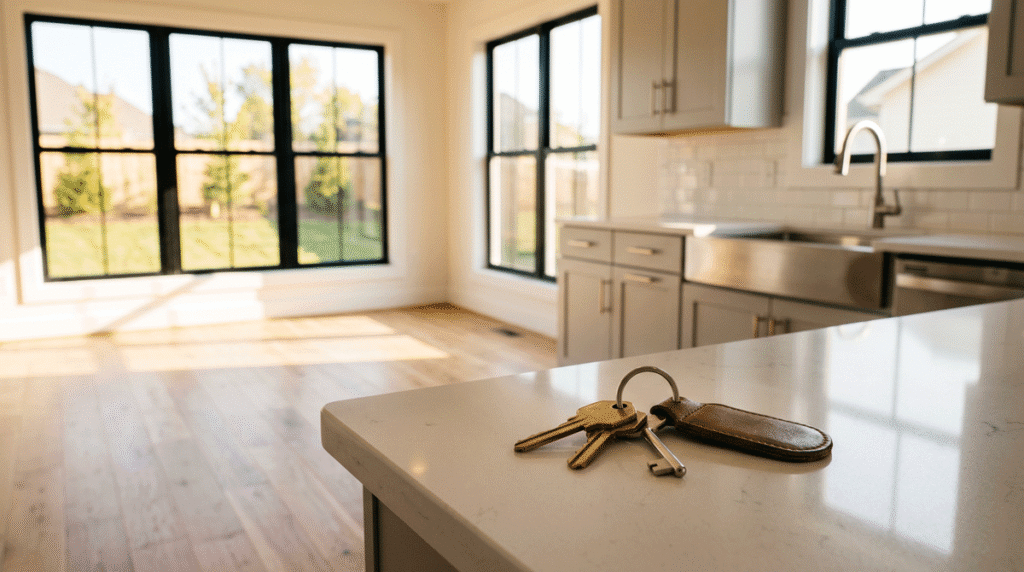
The relationship does not end at move-in, either. The best builders schedule follow-up visits after you settle in and stand behind their work with warranty support. Your custom home is meant to serve your family for decades, and a builder who checks in afterward takes that seriously.
What separates a good process from a stressful one
If you look back across those eight steps, the difference between a smooth build and a miserable one comes down to a few things: clear communication, honest budgeting, decisions locked in early, and a price you can trust. Get those right, and building a custom home becomes one of the most rewarding things a family can do together.
This is exactly how we work at Holloway Family Homes. We have guided families through this process since the 1980s across North Carolina , with our sales team, draftsmen, and project managers walking beside you at every step. We lock in your price with a fixed-price agreement, include premium finishes as standard, offer in-house financing, and keep you updated from the first meeting to your final walkthrough.
Whether you want a fully custom home or a move-in-ready spec home built to the same standard, the path is clear, and communication is constant.
Frequently asked questions
What are the steps in the custom home building process?
The typical path runs through eight stages: an initial consultation, a land and site review, budgeting and financing, choosing a floor plan, making design selections, signing a fixed-price agreement, permitting and construction, and a final walkthrough with move-in and warranty support.
What is the first step in building a custom home?
It starts with a consultation where you discuss your needs, timeline, land, and vision with the builder, and where you both decide whether you are a good fit to work together.
When do I choose my finishes when building a custom home?
You make your material and finish selections during the design stage, before construction begins. Locking these choices in early keeps costs predictable and prevents delays once the build is underway.
How involved will I be during construction?
You do not need to manage the build, but you should expect regular updates, ideally weekly, from a project manager, so you always know how your home is progressing and what happens next.
Ready to take the first step?
Every custom home starts with a single conversation, and there is no pressure in having one. If you are building in North Carolina, we would love to hear about your vision and show you exactly how the process would work for you. Book a consultation with Holloway Family Homes, and let us walk the path with you from first idea to move-in day.
Ready to build on your land?
Let's talk about designing a home that fits your life, not the other way around.
Book a Consultation →