Type “custom home builders near me” into a search bar and you will get a wall of names, ratings, and glossy photos that all start to blur together. Everyone looks professional. Everyone claims quality. So how do you actually figure out which builder deserves to build the home your family will live in for decades?
The answer is a process, not a gut feeling. Finding the right builder near you comes down to knowing where to look, understanding why local really matters, and evaluating your options in the right order. Here is how to do it without the guesswork.
Why “near me” matters more than you think
It is easy to assume a good builder is a good builder no matter where they are based. In reality, building close to home carries real advantages that have nothing to do with convenience.
A local builder knows your area’s building codes and permitting offices, which keeps your approvals moving instead of stalling. They understand the local climate and soil, so your foundation, drainage, and materials suit where you actually live rather than a generic spec. They have established relationships with nearby subcontractors and suppliers, which matters enormously for both quality and scheduling. And perhaps most valuable of all, a builder who works in your region can show you finished homes you can actually drive to and connect you with past clients who live nearby.
When you search for a custom home builder near you, you are not just looking for proximity. You are looking for someone whose experience is rooted in the same ground you plan to build on.
Step 1: Build a shortlist from more than one source
The best builder for you might not be the one with the biggest advertising budget, so cast a wide net before you narrow it down. A few reliable ways to find candidates:
- Ask people you trust. Friends, family, and coworkers who have built are your most honest source. A glowing referral from someone who lived through the process is worth more than any ad.
- Search online, then read carefully. Look past the star rating to what reviewers actually say about communication, budget accuracy, and how problems were handled.
- Drive the neighborhoods you like. Homes going up in areas you admire often have a builder sign out front. If you love a finished home, there is no harm in asking the owner who built it.
- Check local builder associations. Membership in a regional home builders association is a small but real signal that a company takes its craft and reputation seriously.
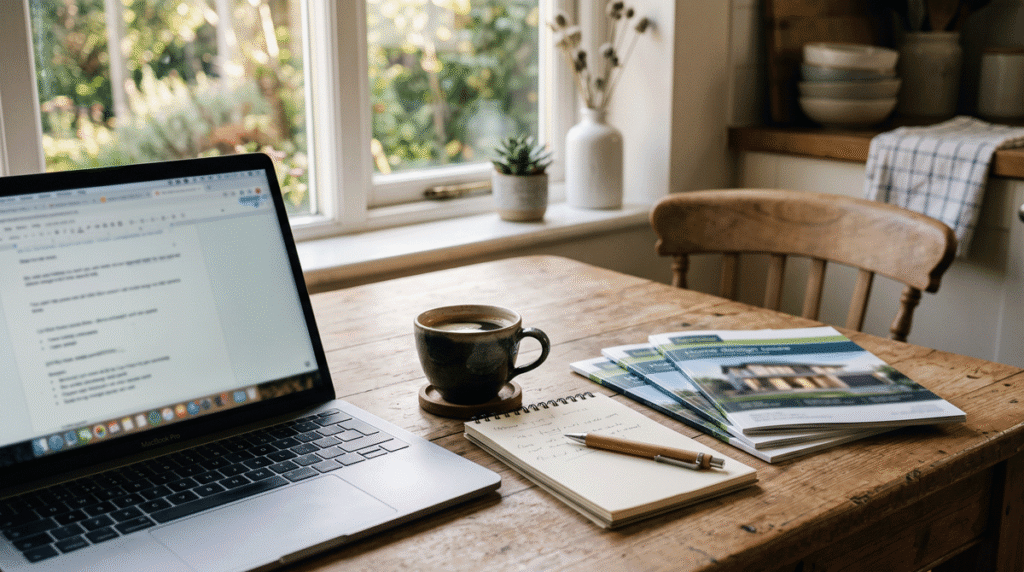
Aim to end up with three or four names worth a closer look. More than that gets overwhelming, and fewer than that does not give you enough to compare.
Step 2: Evaluate the builders on your list
With a shortlist in hand, it is time to dig in. This is where you separate builders who look good online from those who deliver in real life.
Start with their portfolio and their finished homes. Do their completed projects match the style and quality you want, and do the real homes live up to the marketing photos? Then look at their track record. How long have they been building, and are they financially stable enough to still be around for your warranty years from now? A builder who has been working in your region for decades has weathered market ups and downs that younger companies have not.
Next, pay attention to how they communicate from the very first contact. Are they responsive, clear, and willing to answer your questions, or do you feel like you are chasing them for a reply? The way a builder treats you before you sign is the clearest preview of how they will treat you during construction. When you do sit down with them, come prepared with a solid list of questions about pricing, scope, timeline, and warranty so that you can compare answers side by side.
Step 3: Watch for the red flags
Warning signs are just as important as the green flags. Be cautious with any builder who:
- Gives you a vague estimate instead of a clear, itemized price, or resists putting things in writing.
- Pressures you to sign quickly or asks for a large upfront deposit before any real planning.
- Cannot or will not show you past work or connect you with references.
- Is hard to reach or slow to respond before you have even signed anything.
- Quotes a price that seems too good to be true, which often means low allowances that will climb later.
One or two of these does not automatically disqualify a builder, but they are worth a direct conversation. A trustworthy builder will have honest answers. A questionable one will get defensive.
Step 4: Choose the builder who makes the whole thing feel clear
After all the research, the right choice often comes down to a feeling backed by facts: the builder who gave you straight answers, showed you real homes, priced the project transparently, and communicated like a partner rather than a salesperson. That combination is what turns a daunting project into an exciting one.
Look especially for a builder who offers a fixed-price agreement so your cost is locked before you sign, includes quality finishes as standard rather than as expensive upgrades, and keeps you informed with regular updates throughout the build. Those traits separate a smooth build from a stressful one.
Building in North Carolina? Start here
If you’re searching for a builder near you in North Carolina, we would love to be on your shortlist. Holloway Family Homes has been building custom homes since the 1980s, with deep roots in both states and the local knowledge that comes with decades of work.
In North Carolina, we build across the state, including Charlotte, Asheville, Cary, Beaufort, and Danbury, and you can explore all of our North Carolina plans in one place. Wherever you are building with us, you get a fixed-price agreement, premium finishes as standard, in-house financing, and a clear process with communication every step of the way. Take a look at our gallery of finished homes and see what past families have said in our testimonials.
Frequently asked questions
How do I find a good custom home builder near me?
Build a shortlist from personal referrals, careful online research, neighborhoods you admire, and local builder associations. Then evaluate each builder’s portfolio, track record, communication, and pricing transparency before choosing.
Why should I choose a local custom home builder?
A local builder knows your area’s codes and permitting process, understands the regional climate and soil, has established relationships with nearby subcontractors, and can show you finished homes you can actually visit.
How many builders should I get quotes from?
Three or four is a good target. That gives you enough to compare pricing, scope, and communication without becoming overwhelmed by too many options.
What is the biggest red flag when choosing a home builder?
A vague price with no itemized breakdown, or reluctance to put the agreement in writing, is one of the biggest warning signs. It often points to low allowances or hidden costs that surface later.
Ready to meet a builder worth your shortlist?
The right custom home builder near you is out there, and finding them is easier when you know what to look for. If you are building in North Carolina, we would be glad to earn a spot on your list. Book a consultation with Holloway Family Homes, and let us show you what building with a trusted local team feels like.
Ready to build on your land?
Let's talk about designing a home that fits your life, not the other way around.
Book a Consultation →