
Once a family decides to build, the very next question is almost always about the calendar. How long does it take to build a custom home, really, and when can we actually move in? It’s fair to want to know, because the answer touches everything from your lease to your kids’ school year.
The short version is that a custom home usually takes longer than people expect, but not because the construction itself drags. Most of the surprise hides in the months before anyone pours concrete. Let us walk through the real timeline from raw lot to move-in day, phase by phase, so you can plan with your eyes open.
The short answer for 2026
According to the Census Bureau’s most recent Survey of Construction, the average single-family home took about 9.1 months from permit to completion, roughly 1.4 months for authorization and 7.6 months of actual building. That figure covers all homes, though, and a custom home is a different animal.
For a true custom build, plan on 10 to 16 months on average from the first design conversation to the day you get your keys, and up to two years for large or highly detailed homes. The Census data backs this up in a telling way: homes built quickly for sale averaged around 7.6 months, while homes built to an owner’s specifications averaged 15.1 months, nearly double. Personalization takes time, and that is the trade you make for a home built around your life instead of someone else’s plan.
If your timeline is tight, this is worth knowing early, because it shapes which path makes sense for you.
The hidden half: everything before the dirt moves
This is the part that catches most first-time builders off guard. When you picture building a home, you probably picture framing crews and roof trusses. But a big chunk of your timeline is spent on paper, long before a single board is cut.
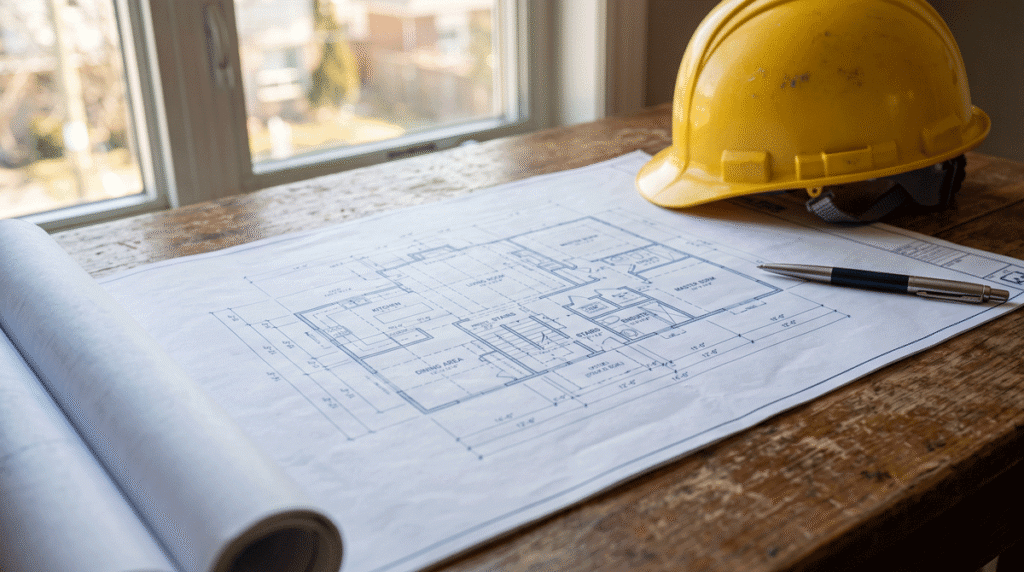
Design and planning alone typically run one to three months. This is where your floor plan takes shape, where you make the big structural decisions, and where a custom home earns the word “custom.” Starting from a proven plan and adjusting it moves faster than designing from a blank sheet, which is one of the simplest ways to shorten this stage without giving up the home you want.
Then comes permitting and approvals, usually another one to two months, and this one is largely out of your builder’s hands. Local jurisdictions work at their own pace, and a busy county can take longer than a quiet one. A builder who knows your area and submits clean, complete plans the first time can save you weeks here, but nobody can rush a permit office.
Add those together, and you are often two to five months into the project before construction visibly begins. Knowing that up front is the difference between feeling behind and feeling on track.
The full timeline, phase by phase
Once the plans are approved and the permits are in hand, the build follows a fairly predictable rhythm. Here is how a typical custom home breaks down:
| Phase | Typical duration | What happens |
| Design and planning | 1 to 3 months | Floor plan, selections, structural decisions |
| Permits and approvals | 1 to 2 months | Local review and sign-off |
| Site work and foundation | About 1 month | Clearing, grading, footings, foundation |
| Framing | 1 to 2 months | The skeleton of the house goes up |
| Interior work | 3 to 6 months | Plumbing, electrical, HVAC, insulation, drywall, finishes |
| Final inspections and walkthrough | 2 to 4 weeks | Sign-offs, punch list, your final walkthrough |
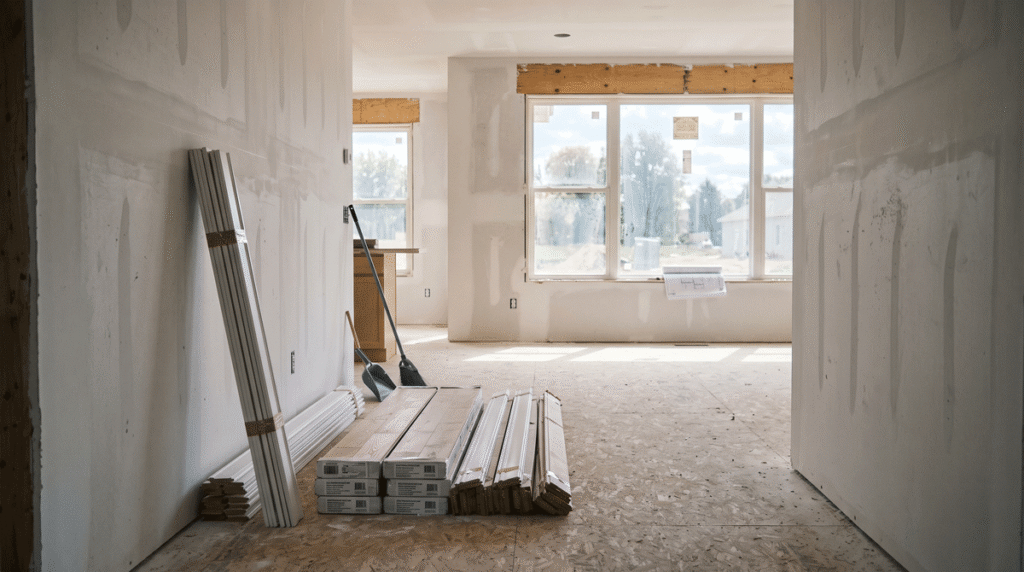
The longest single stretch is interior work, which makes sense since it involves the most decisions and the most trades. Plumbing, electrical, and HVAC get roughed in, then insulation and drywall close up the walls, and then the finishes that make the house yours go in one by one. This is the phase where staying on schedule depends as much on you as on the crew, which brings us to the biggest variable of all.
What speeds a custom home up, and what slows it down
Two homes of identical size can finish months apart. The gap usually comes down to a handful of factors:
- How custom the design is. A modified proven plan moves faster than a fully original design that needs extra engineering.
- Your decision speed. Every selection you have not made, from cabinets to tile to light fixtures, is a small pause waiting to happen. Buyers who make choices early keep the whole build flowing.
- Change orders. Deciding to move a wall or add a window mid-build can stall a phase while work is redone. Locking decisions in during design keeps changes rare.
- Permitting and inspections. Local government timelines vary, and inspection backlogs can add days between phases.
- Weather. Site work and foundation are the most weather-sensitive stages, and a wet season can push the early calendar.
- Material and labor availability. Most supply chains have settled since the disruptions of a few years ago, but a specialty order or a specialized trade can still add lead time.
Notice how many of these you actually influence. The timeline doesn’t just happen to you. A prepared buyer working with an organized builder can shave real weeks off the calendar.
Your role in keeping the calendar on track
This is the piece builders do not always say out loud. The single most powerful thing you can do to keep your home on schedule is to make your selections early and stick with them. When you choose your flooring, cabinets, countertops, fixtures, and finishes before the relevant phase arrives, crews never have to stop and wait on you.
The second most powerful thing is to work with a builder who gives you a realistic timeline up front and keeps you updated as it moves. A clear schedule is not just a courtesy. It helps you catch a slipping date early enough to do something about it, and plan your move, your financing, and your family’s transition with confidence.
How Holloway keeps your build moving
At Holloway Family Homes, we take timelines seriously from the first conversation. Our draftsmen and project managers guide you through decisions so selections happen on time rather than becoming last-minute bottlenecks, and we give you clear, realistic timelines up front with regular updates, not vague promises. You will always know where your home stands and what comes next.
We have built custom homes across North Carolina since the 1980s, and our building process is designed to keep momentum from the first design meeting to your final walkthrough. If your timeline is short and you would rather skip the design and permitting months, a move-in-ready spec home built to the same Holloway standard can get you home much sooner.
Frequently asked questions
How long does it take to build a custom home on average?
Most custom homes take 10 to 16 months from the first design meeting to move-in, with larger or highly detailed homes running up to two years. Construction itself is often only 7 to 9 months; the rest is design and permitting.
Why does building a custom home take longer than buying an existing home?
A custom home is designed and built specifically for you, which adds design, engineering, and permitting time that a finished home does not require. Census data shows owner-specified homes take nearly twice as long as homes built quickly for sale.
What causes the most delays when building a custom home?
Slow selections and mid-build change orders are the most common and most avoidable causes. Permitting timelines, weather during site work, and specialty material lead times can also add time.
Can I make my custom home build go faster?
Yes. Start from a proven plan, make your finish selections early, avoid change orders once construction begins, and choose an organized builder who provides a realistic schedule and regular updates.
Ready to map out your timeline?
The best way to know how long your home will take is to talk through your plan, your lot, and your goals with a builder who will give you an honest schedule. If you are building in North Carolina, we would be glad to lay it all out for you. Book a consultation with Holloway Family Homes, and let us give you a realistic timeline you can actually plan around.
Ready to build on your land?
Let's talk about designing a home that fits your life, not the other way around.
Book a Consultation →