
If you are thinking about building a home this year, one of the first questions on your mind is probably the simplest one to ask and the hardest one to answer: what does it actually cost per square foot to build a house?
You have likely seen numbers all over the map. One site says $150 a square foot, another says $400, and a builder down the road quotes something else entirely. None of them are lying. The cost per square foot to build a house depends on where you build, what you build with, and who does the building. So let us walk through the real 2026 numbers, what they include, and how to land on a figure you can trust for your own project.
The short answer for 2026
Across the country, most new homes in 2026 are being built for between $150 and $250 per square foot for standard, builder-grade construction. Step up to a custom home with premium finishes, and that figure climbs past $400 per square foot in higher-cost markets.
To put that in plain dollars, the national average cost to build a house is around $323,000 for the structure alone, with a typical range of roughly $139,000 to $531,000 depending on size, location, and finish level. Those numbers cover construction only. They do not include the land, and that is a distinction we will come back to because it trips up a lot of first-time builders.
The National Association of Home Builders pegs the base construction cost at about $162 per square foot for an average-sized home. Once you fold in the builder’s overhead and margin, the effective number lands closer to $195 per square foot nationally. That is a useful anchor to keep in your back pocket.
Why “per square foot” is a helpful shortcut, not a promise
Here is the truth that not every builder will tell you up front. Cost per square foot is a great way to compare options and set expectations, but it is an average, not a fixed rule. Two homes of the same size can cost tens of thousands of dollars more or less.
Think about it this way. Kitchens and bathrooms carry the most expensive square footage in any home because of the plumbing, cabinetry, appliances, and tile. A hallway costs a fraction of what a kitchen costs, yet both count as the same square footage on paper. So a home with two kitchens’ worth of high-end space will always run higher per square foot than a simple rectangle with one bathroom, even at identical totals.
Smaller homes also tend to cost more per square foot than larger ones. That surprises people. The reason is that fixed costs like the furnace, the electrical panel, permits, and the kitchen get spread across fewer square feet in a small house, which pushes the per-foot number up. Bigger homes dilute those fixed costs across more space.
The takeaway is not that the metric is useless. It is that you should treat any single number as a starting point and then adjust for your plan, your finishes, and your location.
What actually goes into the cost per square foot
When a builder gives you a price, that number is quietly carrying a lot of moving parts. The big ones are:
- Materials. Framing lumber, concrete, roofing, windows, drywall, and everything else. Material prices have stayed elevated through 2026, and they shift with supply.
- Labor. Framers, electricians, plumbers, HVAC crews, and finish carpenters. Skilled labor is in tight supply in many markets, and that shows up in the price.
- Finishes. This is the single biggest lever you control. Laminate versus quartz, builder carpet versus hardwood, stock cabinets versus custom. Finishes are where a $250 per square foot home becomes a $400 per square foot home.
- Design complexity. Vaulted ceilings, custom rooflines, and unusual angles all cost more than a straightforward layout.
- Site conditions. A flat, cleared lot with easy utility access is cheaper to build on than a sloped or wooded lot that needs grading, fill, or a long driveway.
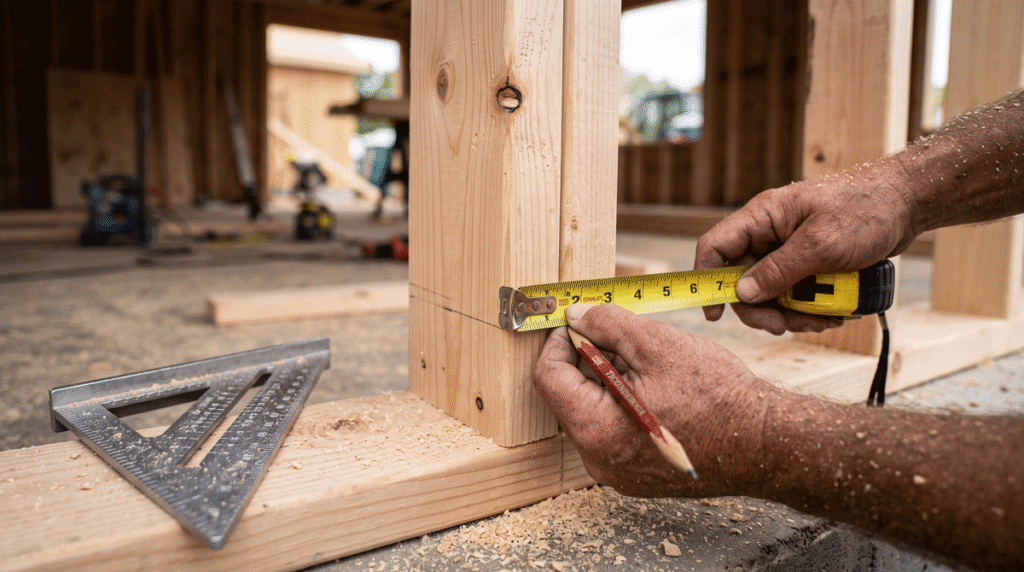
The reason two builders can quote wildly different per-foot prices often comes down to what they included and what they left out of the headline number. That is exactly why a clear, itemized agreement matters so much.
Cost per square foot to build a house in North Carolina
If you are building in North Carolina, the numbers land a little below the priciest coastal and metro markets, which is good news. In 2026, the cost per square foot to build a house in North Carolina runs about $180 to $250 per square foot for builder-grade homes. Custom homes with upgrades like granite or quartz counters and hardwood floors run roughly $250 to $450 per square foot.
Here is how that shakes out by size for a custom build:
| Home size | Custom home cost (TX) |
| 1,500 sq ft | $420,000 to $600,000 |
| 2,000 sq ft | $560,000 to $800,000 |
| 2,500 sq ft | $700,000 to $1,000,000 |
Overall, a construction budget typically falls somewhere between $280,000 and $900,000, again depending on your finishes and exactly where in the state you build. A home outside a smaller town will usually cost less to build than the same home inside a booming metro, simply because of land and labor pressure.
Builder grade versus custom: why the range is so wide
You have probably noticed that the gap between the low end and the high end is huge. That gap is almost entirely about choices, not luck.
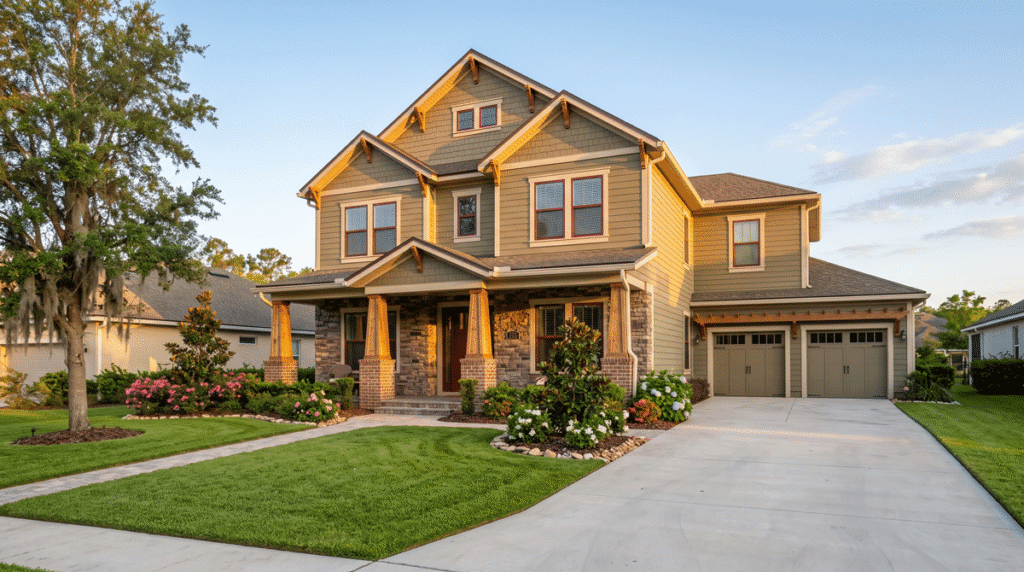
A builder-grade or spec home uses proven plans and a standard finish package, which keeps costs predictable and the timeline short. A custom home is designed around your family, your lot, and your taste, so you decide how far to push on materials, layout, and detail. Both can be excellent homes. They sit at different points on the cost-per-square-foot scale.
One thing worth knowing: a good builder can include finishes in a spec home that many buyers assume are custom only. Luxury vinyl plank flooring and granite or quartz countertops, for example, do not have to be an upgrade. When they come standard, you get a higher-quality home without paying custom prices.
What the per square foot number usually leaves out
This is the part that catches people off guard, so read it twice. Almost every cost-per-square-foot figure you see online covers the house itself and nothing more. The items below are usually separate:
- The land you build on
- Site preparation, grading, and clearing
- Well, septic, or utility hookups
- Permits and impact fees
- Driveways, landscaping, and outdoor features
Depending on your lot, these can add tens of thousands of dollars to your all-in cost. For a 2,000-square-foot home in a mid-cost market, a realistic all-in budget once you add land and site work often reaches $440,000 to $490,000. Knowing this early keeps you from falling in love with a number that never tells the whole story.
How to get a cost you can actually count on.
The wide ranges above exist because most builders quote an estimate, and estimates move. If certainty matters to you, and for most families it matters a lot, look for a builder who will put the price in writing and stand behind it.
A fixed price agreement locks your number after you sign, which means a jump in lumber prices six months into your build is the builder’s problem to manage, not a surprise that lands on your invoice. Pair that with a builder who follows a clear, itemized process, and you replace a scary guessing game with a plan you can budget around.
At Holloway Family Homes, that is exactly how we work. We have been building custom and spec homes since the 1980s across North Carolina, and we offer a fixed-price agreement so you know your number before the first shovel hits the ground. Premium finishes like luxury vinyl plank flooring and quartz or granite counters come standard, and our in-house financing gives you flexibility while your build comes together.
Frequently asked questions
What is the average cost per square foot to build a house in 2026?
Most standard homes cost $150 to $250 per square foot, while custom homes with premium finishes can run past $400 per square foot. The national average for the structure alone is around $323,000.
Is it cheaper to build a bigger or smaller house per square foot?
Larger homes usually cost less per square foot because fixed costs like the kitchen, furnace, and permits get spread across more space. Smaller homes spread those same costs over fewer square feet, which raises the per-foot price.
Does the cost per square foot include land?
No. Almost every published figure covers construction only. Land, site prep, utility hookups, permits, and landscaping are typically separate and can add significantly to your total.
How can I keep my building costs predictable?
Choose a builder who offers a fixed price agreement and an itemized scope of work. That locks in your price and spells out exactly what is and isn’t included, so material price swings don’t blow up your budget.
Ready to talk about real numbers?
A cost-per-square-foot chart is a fine place to start, but your home deserves a real figure built around your plan and your lot. If you are building in North Carolina, we would be glad to walk you through it. Book a consultation with Holloway Family Homes, and let us give you a clear, fixed price you can plan your future around.
Ready to build on your land?
Let's talk about designing a home that fits your life, not the other way around.
Book a Consultation →